Every frame on this page comes from a real security camera — night-time infrared, wide angles, glare and distance. The boxes and labels are the detections Vengeea raised. Faces and identifying signs are blurred.
Customer names and sites are only shown with the customer's permission. The strongest proof is your own footage: we'll run Vengeea against your cameras under NDA and show you what it catches.
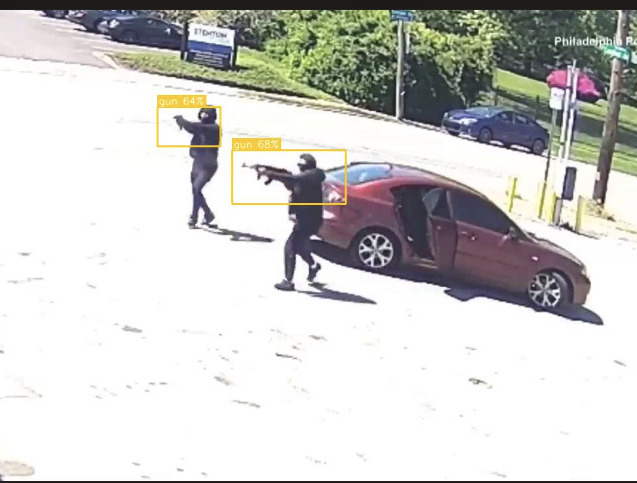
A forecourt camera over the pump area of a gas station. Two individuals are seen outside with firearms drawn.
Both guns are boxed and labelled with the model's confidence. A visible firearm is the one event where seconds matter most, so it goes straight to the security team with the frame attached.
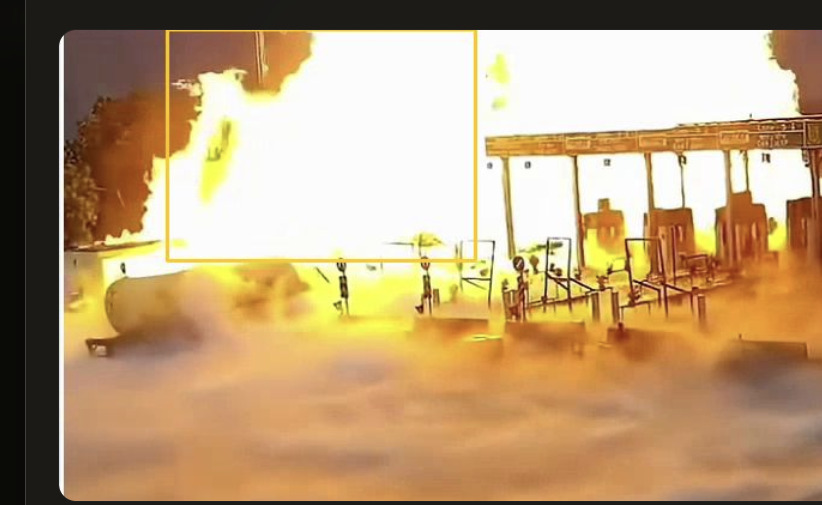
An outdoor camera overlooking a roadside structure. Flames break out and spread fast, with smoke already rolling across the ground.
The flames are boxed and labelled FIRE with the model's confidence, so the alert goes out while the fire is still being confirmed, not after it's already visible to everyone nearby.
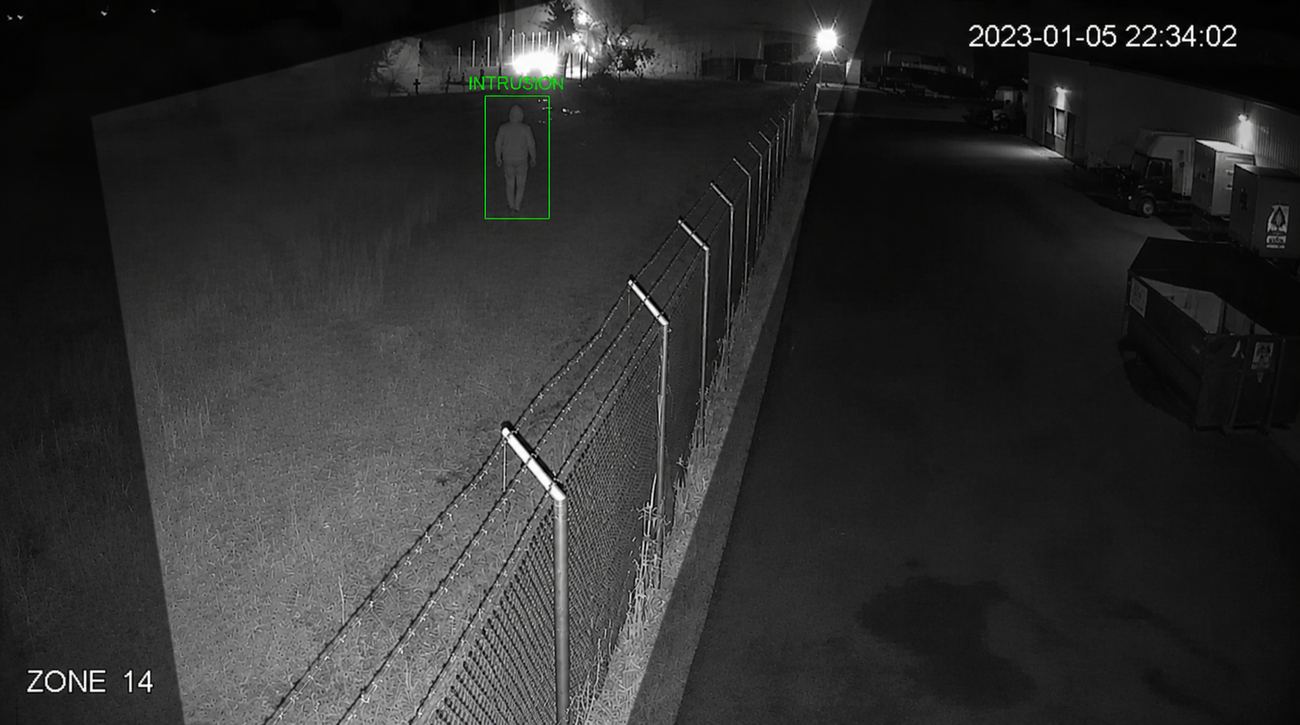
A wide infrared view of a fenced yard at night. One person walks through the restricted zone, far from the camera, with floodlights glaring in the background.
The person is boxed and labelled INTRUSION. Small, distant, low-contrast figures at night are where simple motion detection tends to miss the event — or fire on lights and animals instead.
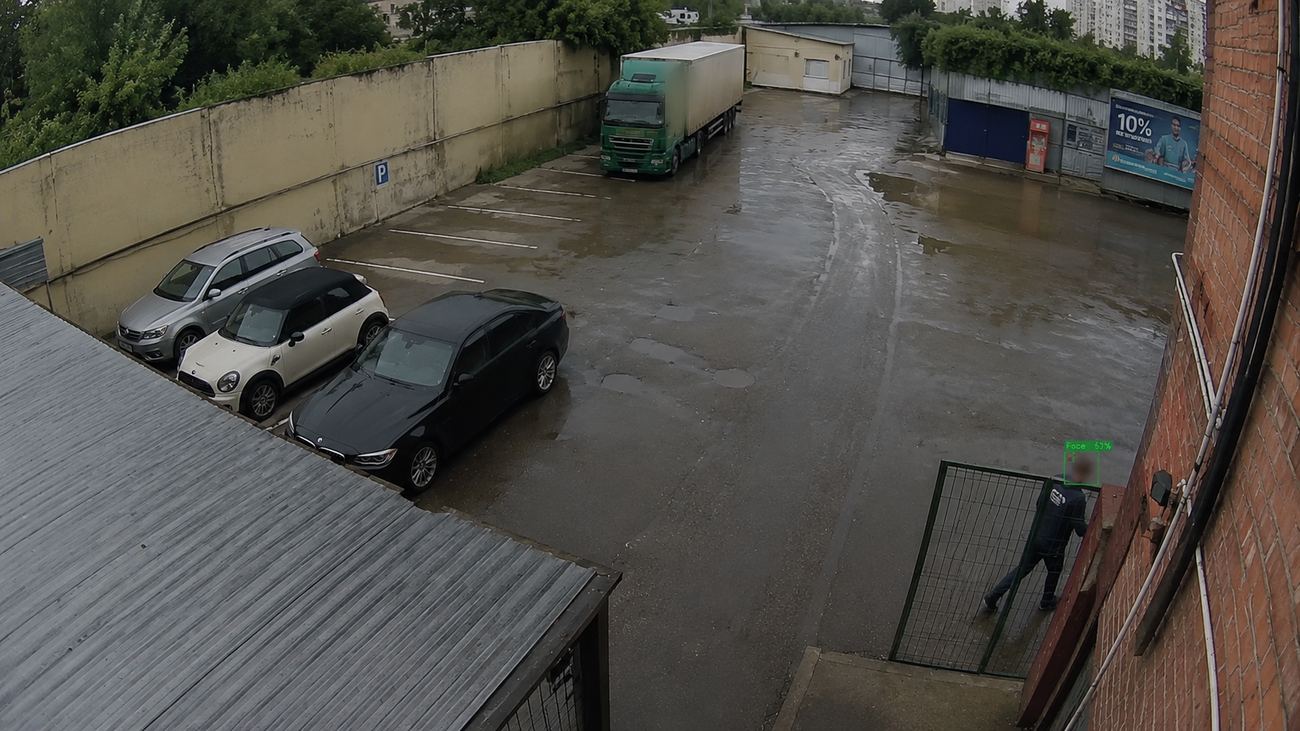
A camera mounted high on a wall looks down on a yard with parked trucks and cars. A person walks through a side gate in a mesh fence.
The person's face is detected and boxed, with its confidence score. With face match switched on, the face is checked against a watchlist you control. It is blurred on this page.
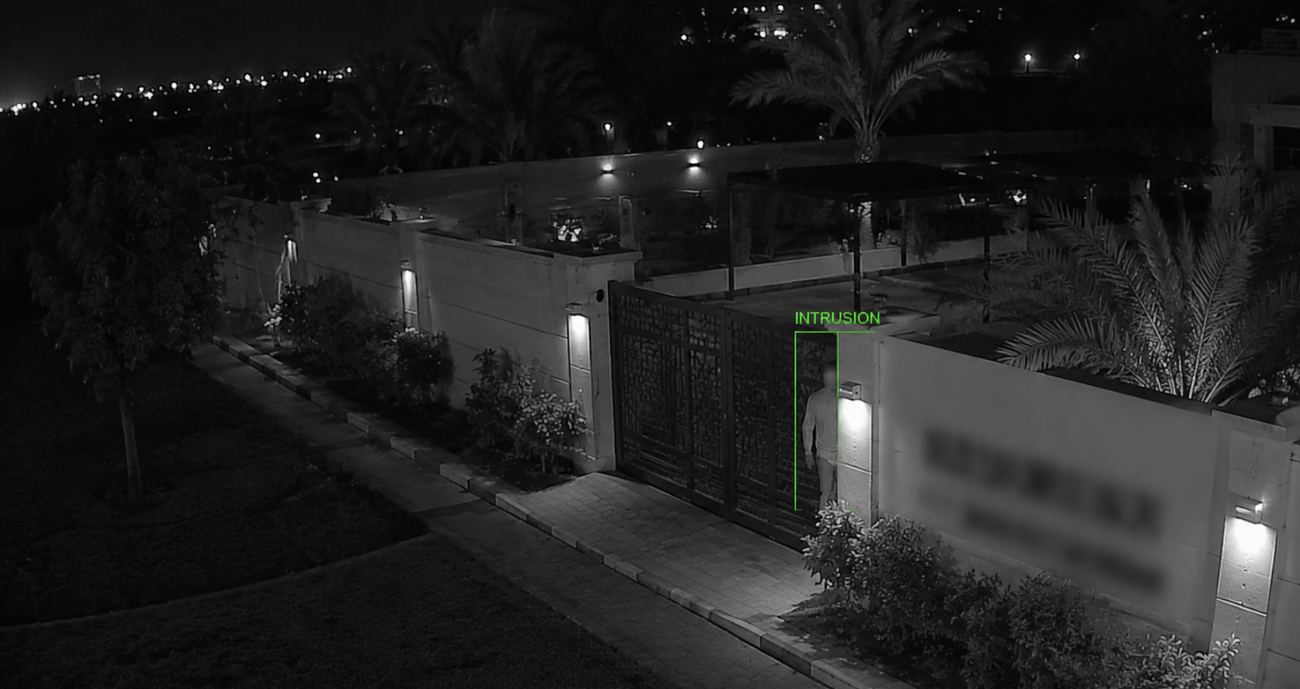
A walled entrance at night, lit by wall lamps, with a metal gate and a sign on the wall. A person stands at the gate.
The person is boxed and labelled INTRUSION. The face and the sign are blurred on this page to protect the site.
We'll run Vengeea against your actual cameras under NDA, so you're judging real detections on your own site — not a demo reel.