One inference pipeline running on the RTSP streams you already have. Turn on what a site needs — each module scores its own feed, so adding one never means adding a camera.
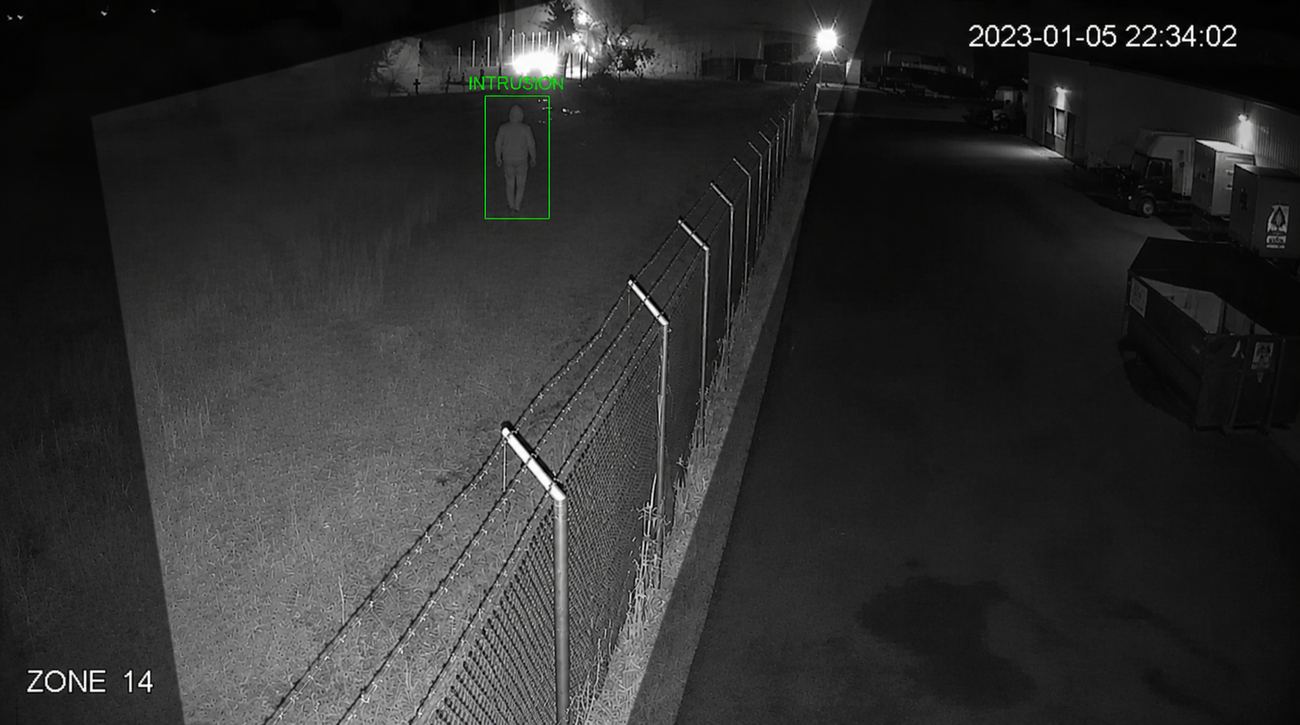 Real frame · IR perimeter camera
Motion-triggered CCTV alarms every branch sways in the wind at 2 a.m. Intrusion analytics only fires on a person crossing a line you drew — which is why it's the module that actually stays turned on past the first month.
People entering a restricted polygon, line-crossing in either direction, and presence detected outside the hours you set — separate from generic motion.
Draw a zone or trip line per camera in the dashboard, no calibration rig or install visit required. A person crossing it fires an alert with a timestamped snapshot in about 2 seconds.
Fence lines, substations, construction sites, loading docks, and retail after close — anywhere a guard would otherwise be watching an empty lot.
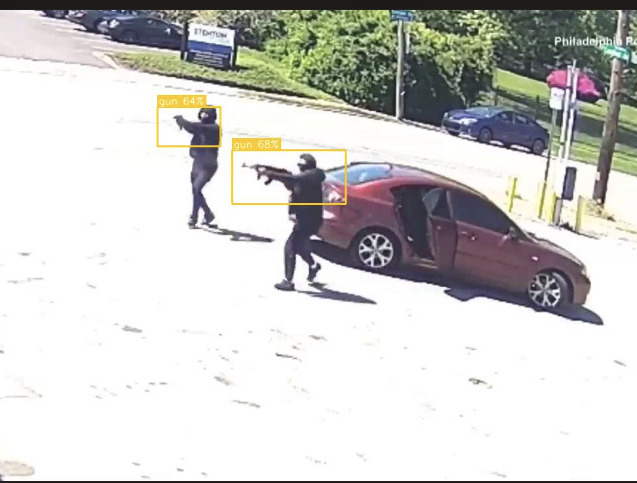 Real detection · shop camera · gun identified
A weapon in frame has to reach the right person in seconds, not the next shift-change review. Detection routes straight to a critical alert — console, phone push and messenger channel at once — while there's still time to lock a door or clear a floor.
Visible handguns, rifles, shotguns and edged weapons in frame — flagged with bounding box and confidence score, not a generic "suspicious object" alert.
Every frame is scored on-site as it arrives over RTSP. A weapon match escalates instantly to a critical alert with a snapshot attached — no waiting on a human reviewer.
Retail, schools, banks, houses of worship, and critical infrastructure — sites where a weapon on camera has to become a response in under a minute.
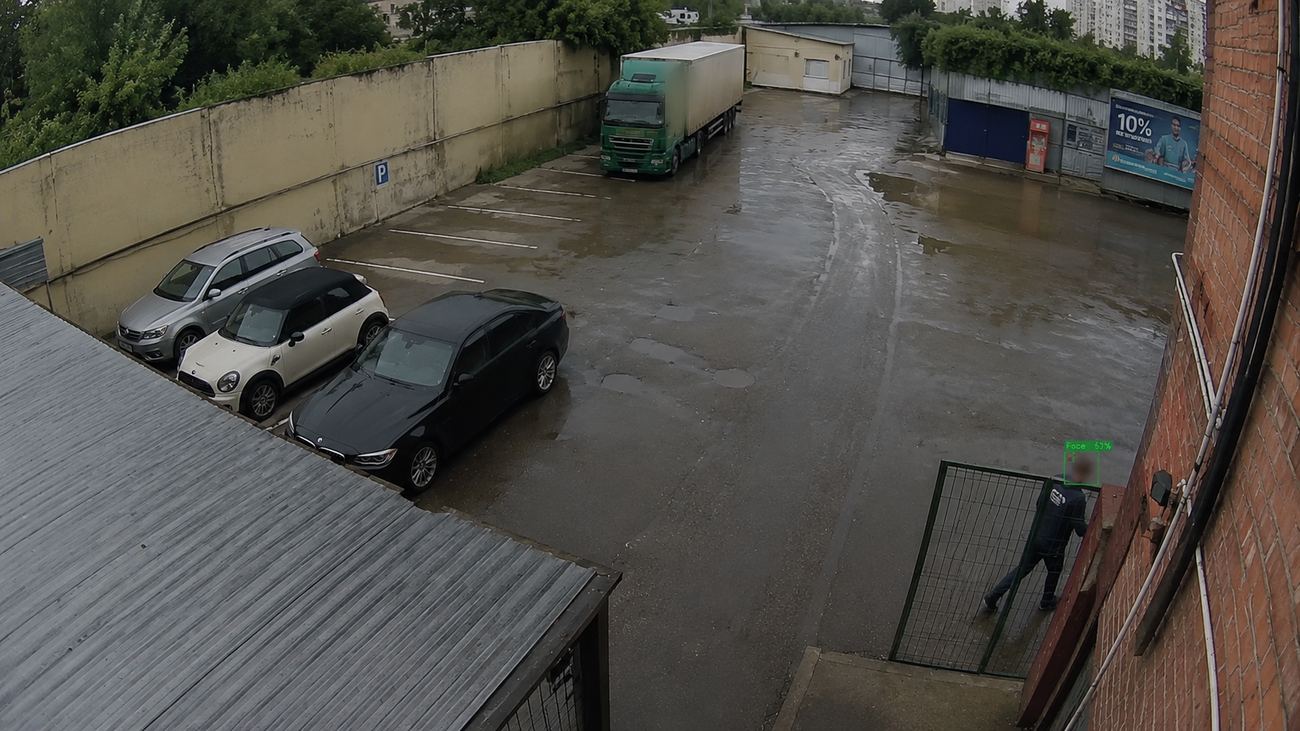 Real frame · side gate · face detected
Matches faces against a watchlist your team controls — the list and the reference images stay on your infrastructure, never a third-party cloud database. That matters for teams weighing biometric-privacy exposure, not just accuracy.
Watchlist matches — trespass notices, banned customers, terminated employees — plus repeat-visitor flags across entrances you're monitoring.
Upload reference images to your watchlist. A match at any covered camera fires an alert with snapshot and timestamp for the operator to confirm.
Retail loss prevention, restricted-access perimeters, and front-of-house security where a name on a list needs to be caught at the door, not on a report.
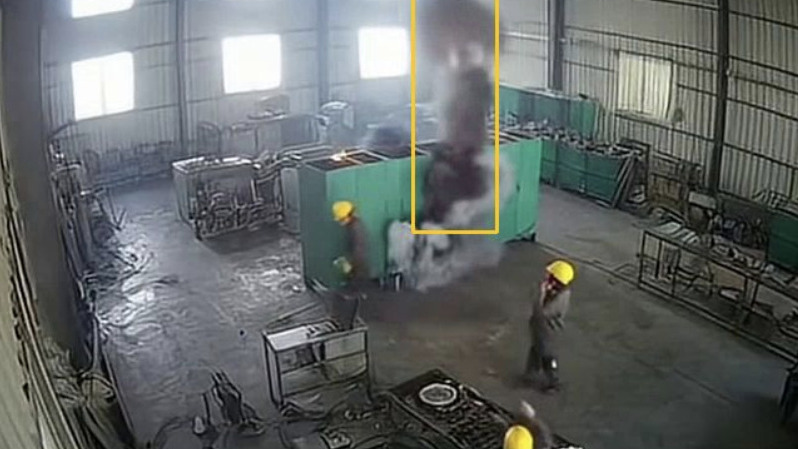 Real frame · storage yard · smoke detected
Heat and particulate sensors need smoke to reach the ceiling before they trigger. A camera sees the flame or the first haze at the source — often minutes earlier, in open yards and high-ceiling spaces where point sensors don't reach at all.
Early-stage smoke signature and open flame in frame, day or night, indoors or across an open yard or pipe rack.
Every frame is analyzed for smoke and flame characteristics. A detection fires an alert with camera location and snapshot — ahead of a point sensor, not instead of one.
Warehouses, manufacturing floors, storage yards, and transportation hubs where a fire that reaches a sensor has already reached inventory.
 Illustration
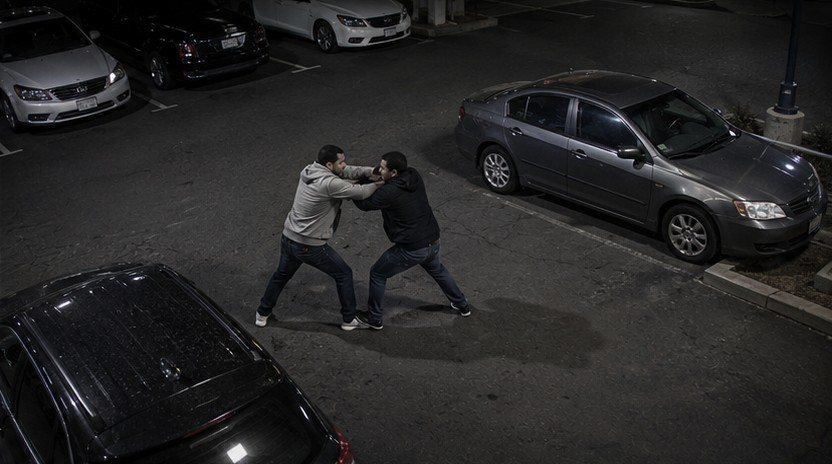
In development, currently running with early-access sites. Flags physical confrontation and vandalism as it starts rather than surfacing it in a next-day incident review — the difference between security walking in on a fight and reading about one.
Physical confrontation, pushing and shoving, thrown objects, and active property damage.
Posture and motion pattern analysis flags aggressive behavior as it begins, not once it has escalated into a crowd.
Retail floors, transit hubs, entertainment venues and schools — anywhere a fight needs a response measured in seconds, not a shift report.
 Illustration
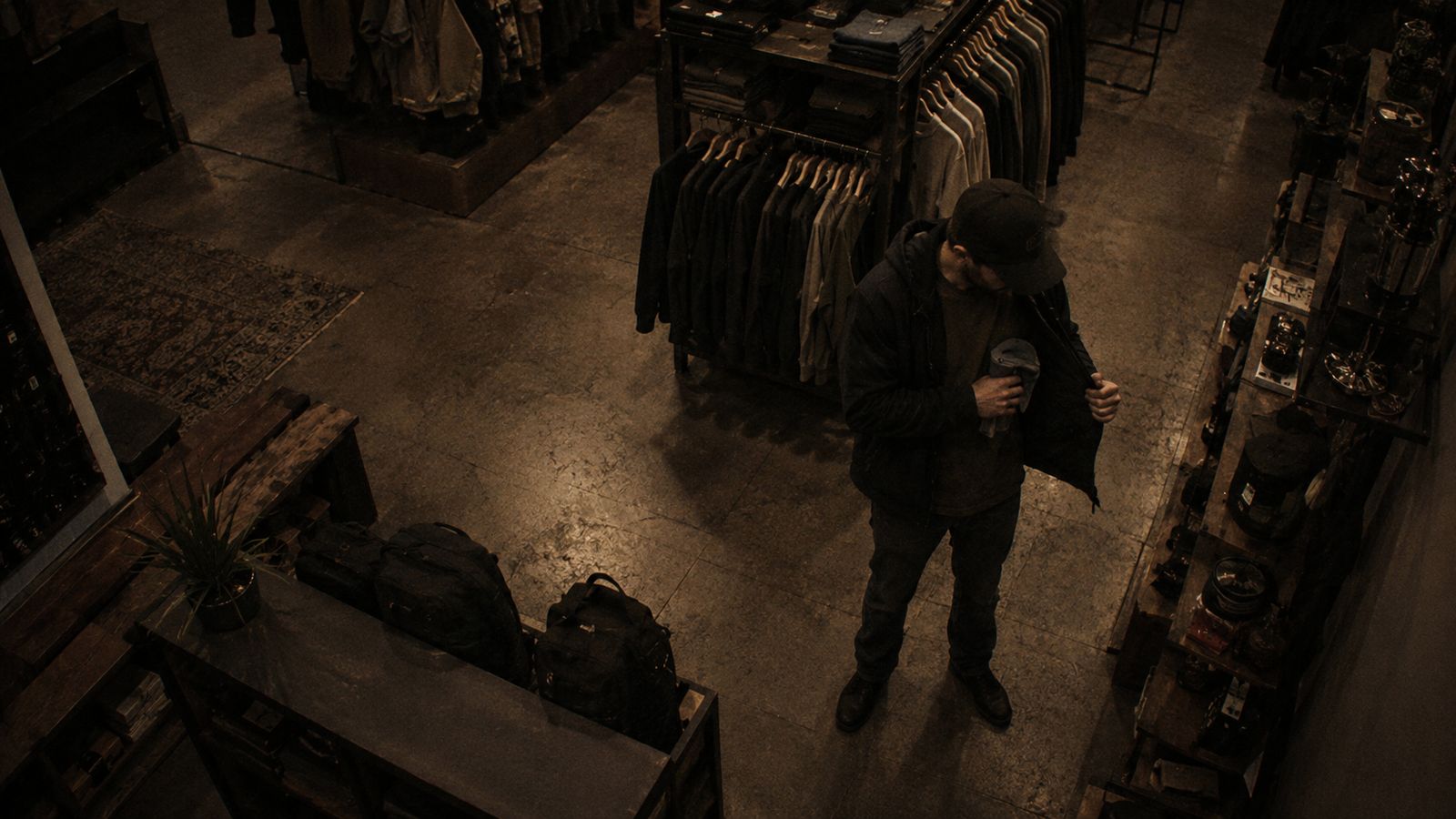
In development, currently running with early-access sites. Aims at the loss that never shows up as a clean "theft" line item — it gets written off as unexplained shrink because nobody was watching the right aisle at the right second.
Concealment behavior and unauthorized item removal from shelves, displays and storage areas.
Object tracking across the zone flags suspected removal in real time, with a snapshot attached for loss-prevention review.
Retail sales floors, warehouses, tool rental counters, and any site tracking shrink against a P&L line.
 Illustration
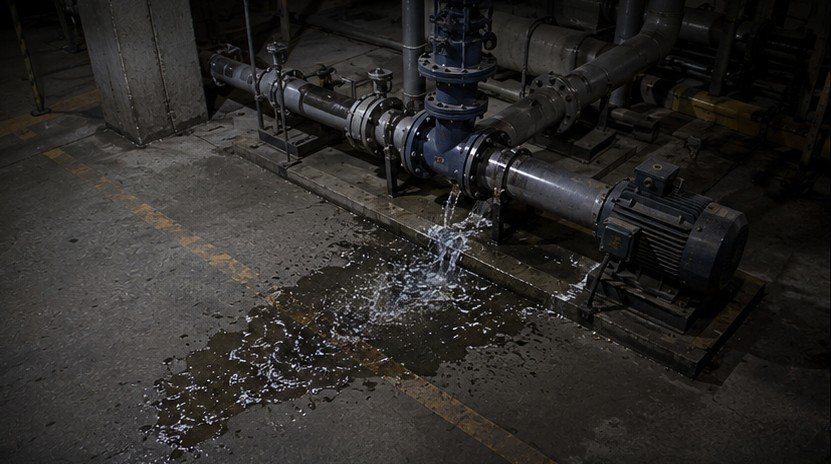
In development, currently running with early-access sites. A leak on a production floor is a safety incident and a downtime clock — this catches the pool on the floor before someone finds it by slipping in it.
Water pooling, coolant and chemical spills, and early-stage flooding on floors and containment areas.
Surface and reflectivity analysis flags pooling liquid on camera, with a location snapshot sent the moment it's confirmed.
Data centers, manufacturing floors, chemical plants and cold storage — anywhere a leak means both a safety report and equipment risk.
On the roadmap, not yet built. Planned to flag missing or improperly worn PPE on production and construction sites so a safety walk isn't the only time non-compliance gets caught.
Missing or improperly worn helmets, safety vests, harnesses, and other required protective gear.
Computer vision identifies non-compliant PPE against the zone's requirements and flags the worker for corrective action.
Construction sites, manufacturing plants and industrial facilities with a documented PPE requirement to enforce.
On the roadmap, not yet built. Planned to turn existing entrance and floor cameras into occupancy and footfall counters, without a separate people-counting sensor at every door.
Real-time people counts, queue lengths, zone occupancy, and traffic-flow patterns across entrances.
Tracking across zones with alerts when an occupancy or queue-length threshold you set is exceeded.
Retail stores, airports, transit hubs and event spaces managing capacity or queue service levels.
 Real output · plate read · numbers blurred
Reads and logs plates at gates and gantries with your existing traffic cameras — no dedicated ANPR camera or gate hardware to install.
License plate number, vehicle type and color, and direction of travel at entry and exit points.
Optical character recognition extracts the plate from each frame and checks it against a whitelist or blacklist in real time, logging every read for the record.
Gated facilities, parking operations, secure perimeters and fleet yards needing a searchable log of every vehicle that came through.
On the roadmap, not yet built. Planned to flag bags and packages left unattended in controlled or public areas without needing a separate object-detection sensor.
Bags, packages and personal items left unattended past a dwell-time threshold you configure.
Object presence is tracked over time; an item that stays stationary beyond the threshold, separated from its owner, triggers an alert.
Transit stations, airports, stadiums and shopping centers with unattended-object protocols to enforce.
Every site has one scenario the standard list doesn't name. Describe it and we'll scope a custom module against your own footage.