A spill or leak in a monitored zone triggers a notification the moment liquid becomes visible — not on the next patrol round, not when someone finally walks past it. Point-level float sensors and leak-detection cable only catch what happens directly under them; a camera watches the whole floor at once.
Liquid Leak Detection is currently finishing testing ahead of general rollout. Early-access pilots are open now — talk to us about running it at your site.
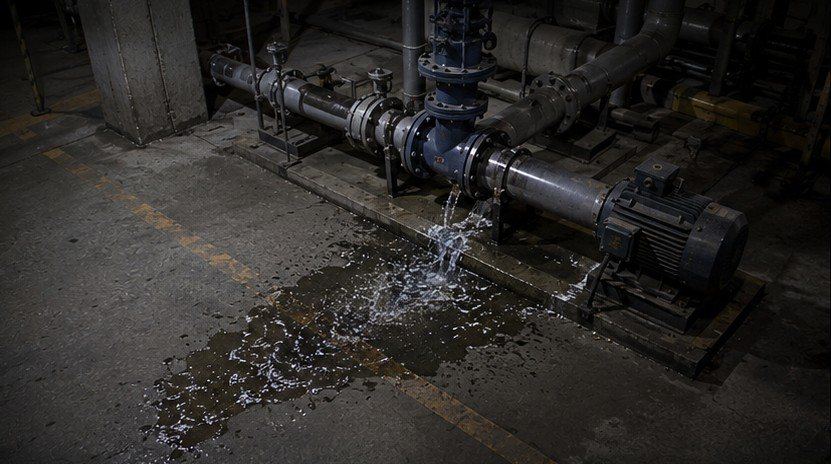
Spills and puddles on the floor, leaking pipeline joints and fittings, and liquid accumulation in restricted or controlled areas — flagged wherever liquid becomes visible, not just at the fixed points a float switch or leak-detection cable happens to cover.
Chemical plants, fuel depots, food and beverage processing floors, pump stations, server rooms and other technical spaces — anywhere a leak means downtime, a safety hazard, or a reporting obligation if it isn't caught fast.
Damage from a leak grows every minute it goes unnoticed. In one early industrial deployment, a leak was caught in the module's first week live, avoiding roughly three hours of production downtime — the kind of single incident that pays for the deployment on its own. The module cuts response time from a patrol cycle to seconds.
Liquid Leak Detection + Intrusion — one deployment covers both technical hazards (leaks, spills, pipeline failures) and security risks (unauthorized access) on the same cameras, so a single PTZ over a pump station delivers two operational outcomes instead of one.